Overcoming ‘Cabin Fever’: Why Modern Cruise Ships Feel Larger Than You Think
Today’s ships are designed less like one enormous floating building and more like a collection of different neighbourhoods. Pools, restaurants, theatres, promenades, gardens, sports areas and quieter lounges are spread across multiple decks. Some spaces even change purpose throughout the day.
If the thought of spending a week on a cruise ship makes you wonder whether you will feel trapped, crowded or simply run out of things to do, modern cruising might surprise you.
Today’s ships are designed less like one enormous floating building and more like a collection of different neighbourhoods. Pools, restaurants, theatres, promenades, gardens, sports areas and quieter lounges are spread across multiple decks. Some spaces even change purpose throughout the day.
The result? Even when thousands of people are onboard, you rarely spend your entire holiday surrounded by them.
Here is what the size of modern cruise ships really means, what you can do onboard and how to choose a ship that suits the way you like to holiday.
Do Modern Cruise Ships Feel Cramped? Why the Answer Is Usually No
One of the biggest misconceptions about cruising is that you spend most of your holiday inside your cabin.
In reality, your cabin is just one small part of the experience.
Step outside and modern cruise ship interiors can include multi-deck atriums, indoor promenades, theatres, restaurants, bars, cafés, spas and entertainment venues. Head outside, and you might find swimming pools, sports courts, walking tracks, gardens and large open decks.
The clever part is how these spaces are arranged.
How a Ship Is Designed to Spread Guests Out
Rather than placing everything in one central area, modern ships divide activities between different decks and zones.
At 10am, one group might be beside the pool while another is having breakfast. Others could be at the gym, joining a quiz, sitting in a café or finding a quiet spot overlooking the sea.
By evening, the same guests might be split between restaurants, theatres, bars, live music venues and outdoor decks.
Celebrity Apex is a good example. Its Magic Carpet is a cantilevered platform positioned on the side of the ship, while other areas include the Grand Plaza, Eden, Rooftop Garden, Solarium and Theatre.
That variety is one reason a large ship can feel very different from simply putting several thousand people inside the same building.
How Big Is a Modern Cruise Ship?
Modern cruise ships vary widely in size. Some are designed as large resorts with thousands of guests and a huge choice of venues, while others carry fewer people and offer a more compact layout.
Looking at both standard guest capacity and maximum occupancy provides a useful indication of scale.
Standard guest capacity is generally based on two people sharing each cabin. Maximum occupancy also accounts for additional berths being used, such as children sharing a family cabin.
Ship
Cruise line
Approx. length
Guests (double occupancy)
Maximum occupancy
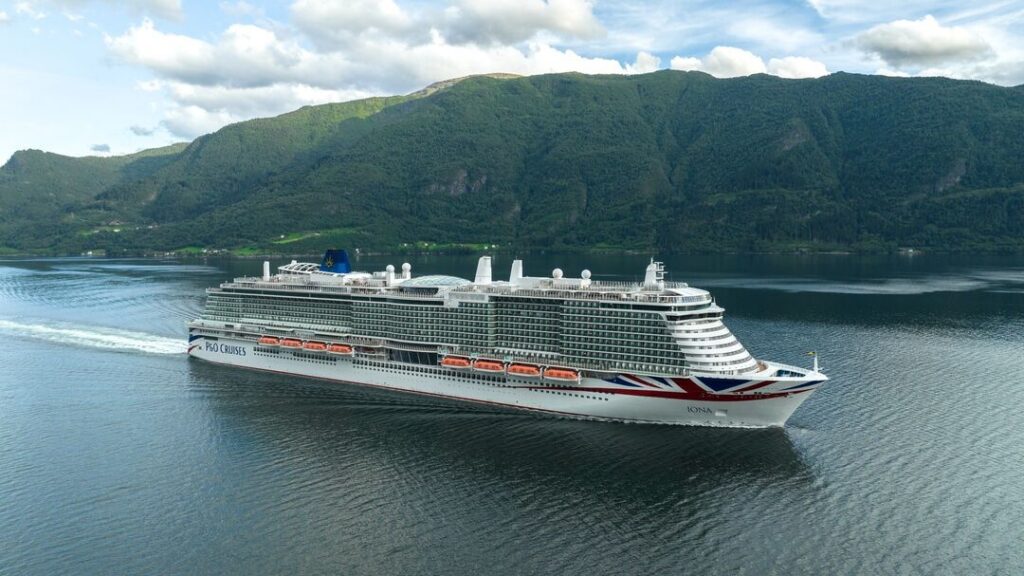
Iona
P&O Cruises
344m
5,206
6,264
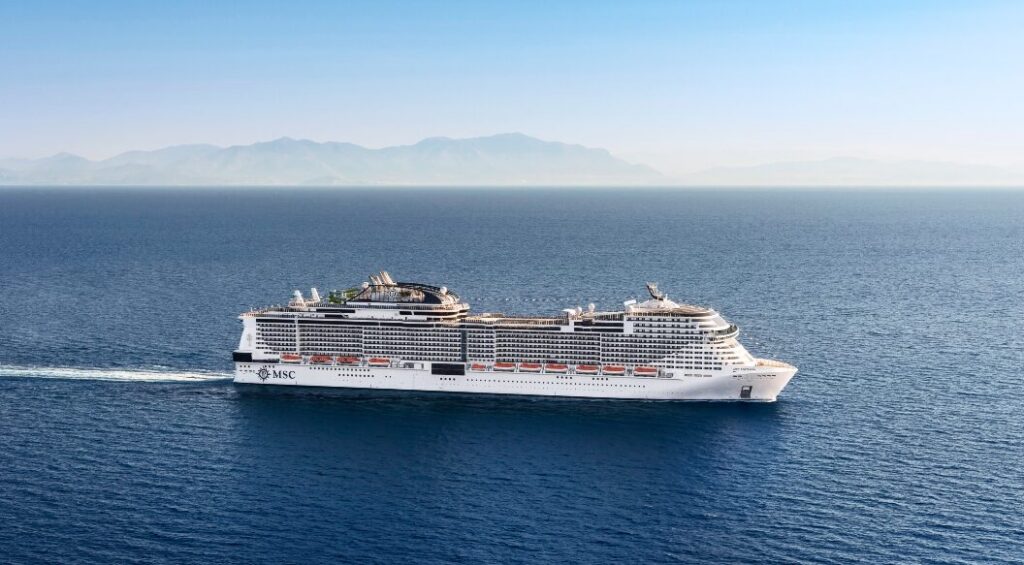
MSC Virtuosa
MSC Cruises
331m
4,842
6,334
Queen Mary 2
Cunard
345m
2,695
3,090
Ambience
Ambassador Cruise Line
245m
1,400
1,789
These figures put the differences between ships into perspective.
Iona and MSC Virtuosa are similar in length, for example, but their maximum occupancies differ. Queen Mary 2 is approximately the same length as Iona yet carries significantly fewer guests.
Ambience provides another contrast. At around 245 metres long, it is smaller than the other ships in this comparison and carries fewer than 1,800 guests at maximum occupancy.
Maximum occupancy can be particularly useful when comparing ships that attract families. During school holidays, more third and fourth berths may be occupied, so the number of people onboard can be higher than the standard double-occupancy figure suggests.
However, capacity does not tell the whole story.
A ship carrying 5,000 guests does not put all 5,000 people in the same place. How public areas are designed and how successfully restaurants, pools, entertainment venues and open decks distribute guests can make a significant difference to how busy the ship actually feels.
Does a Bigger Ship Feel More Crowded?
Not necessarily.
Larger ships carry more guests, but they are often designed with more places for those guests to go. Multiple restaurants, swimming pools, entertainment venues, bars, lounges and activity areas can spread people across different decks.
Smaller ships carry fewer people but naturally have fewer public spaces.
There will also be times when almost any ship feels busier. Breakfast before a port day, sunny afternoons around the main pool and the period immediately before a popular theatre show are obvious examples.
That is why choosing a cruise based purely on the number of guests can be misleading.
Instead, consider the number of guests, maximum occupancy, physical size and onboard facilities together. Then think about the type of holiday you want.
If you love having dozens of options available throughout the day, a large ship could suit you. If you prefer to learn your way around quickly and have fewer venues to choose from, a smaller ship might feel more comfortable.
A Sea Day, Hour by Hour
Worried about being bored when there is no port to explore? A sea day is often when you discover just how many things there are to do on a cruise ship.
Here is what one could look like:
8am: Start Slowly
Wake up without needing to get ready for a shore excursion. Have breakfast, grab a coffee and find somewhere overlooking the sea.
If you prefer a more active start, head to the gym, walk around the open deck or check the daily programme for a morning class.
10am: Try Something Different
This is where the experience varies significantly between ships.
You might join a quiz or activity, head for the swimming pool or spend a couple of hours reading somewhere quiet.
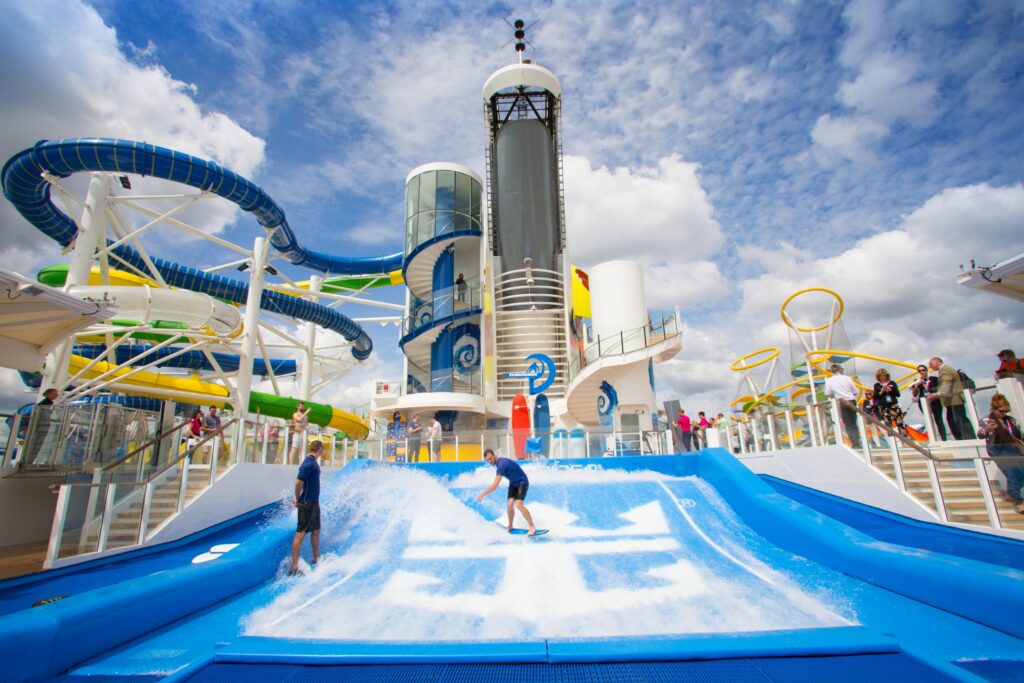
On Royal Caribbean’s Independence of the Seas, the choice becomes more energetic. Activities include the FlowRider surf simulator, The Perfect Storm waterslides, laser tag, mini golf, ice skating and a rock-climbing wall.
You do not have to do any of them, of course. That is the point.
1pm: Lunch and a Change of Scene
Have lunch somewhere different from breakfast, then explore another part of the ship.
A larger ship can have enough distinct areas that moving from the pool deck to an indoor promenade or quiet lounge feels like a complete change of scenery.
This is also a good time to try a scheduled activity, head to the spa or simply do nothing for a while.
4pm: Find Your Own Space
Not every sea day needs to be filled with activities.
Find a quieter deck, café or lounge and switch off. If you are travelling as a family, this might also be when children enjoy age-appropriate clubs while adults get some time to themselves.
7pm: Dinner
The ship changes again in the evening.
Pool decks quiet down while restaurants, bars, and entertainment venues come to life. Depending on the ship, you might have several included and speciality restaurants to choose between.
9pm: Showtime
Live entertainment remains one of the most popular ways to spend an evening onboard.
Depending on the cruise line, that might mean a theatre production, a live band, comedy, dancing, a game show, or something more unusual.
You can then finish with a drink, find some live music or head back to your cabin. Tomorrow can look completely different.
Free Things to Do Onboard
You do not need to pay for an extra activity every few hours to enjoy a cruise.
Although inclusions differ between cruise lines and ships, your fare usually includes access to a selection of entertainment, leisure facilities, and organised activities.
Swimming pools are an obvious starting point. You may also find quizzes, deck games, live music and theatre entertainment included in your fare.
Some ships take included activities much further. Independence of the Seas, for example, offers activities including FlowRider, mini golf, ice skating, table tennis, dance classes and pool activities, although selected experiences and services may carry an additional charge.
P&O Cruises, MSC Cruises, Cunard and other cruise lines available through Odysia Cruise also offer their own combinations of pools, live entertainment and organised daytime activities.
The key is to check the individual ship rather than assume every cruise line offers the same experience.
Which Ship Suits You? Couples, Families and Younger Cruisers
There is no single ‘best’ cruise ship. The better question is which ship fits how you want to spend your holiday.
Ship
Best for
Standout feature
Celebrity Apex
Couples and contemporary escapes
Magic Carpet and Rooftop Garden
Independence of the Seas
Families and active travellers
FlowRider, waterslides and activity programme
Iona
Couples, families and first-timers
Wide choice of dining and entertainment spaces
MSC Virtuosa
Families and younger cruisers
Indoor promenade and extensive entertainment
Queen Mary 2
Couples and travellers wanting plenty of public spaces
Extensive lounges, restaurants and open decks
Ambience
Adults looking for a smaller ship
Lower overall guest capacity
Celebrity Apex is a particularly good example of how modern design creates different environments within one ship. Alongside the Magic Carpet, it features spaces including Eden, the Rooftop Garden, Solarium, Grand Plaza and Theatre.
If activities matter more, Royal Caribbean takes a different approach. Independence of the Seas combines swimming pools and entertainment with attractions including FlowRider, The Perfect Storm, laser tag and ice skating.
For families and younger travellers, MSC Virtuosa offers another style, combining a large indoor promenade with restaurants, entertainment and family-focused facilities.
Think about what you actually want to do rather than automatically choosing the largest or newest ship.
Points to Consider Before You Book
No cruise ship is completely immune from crowds.
Breakfast at the buffet on a sea-day morning, the pool deck in good weather, and the exits when everyone wants to go ashore can all get busy.
The key difference is that you do not have to spend all day in those areas.
If avoiding crowds matters to you, study the deck plan before booking. Look at how many pools and public spaces there are, where the quieter lounges are and whether there are adult-only areas.
Cabin location matters too. A cabin close to lifts and stairs can make navigating a large ship easier, while a cabin further along a corridor may have less passing foot traffic. Check what is directly above and below the cabin, particularly if you are sensitive to noise.
Also compare the standard guest capacity with maximum occupancy. A family-focused ship may operate closer to its maximum capacity during school holidays because more cabins are accommodating three or four people.
Finally, consider the ship’s size. Bigger ships tend to offer more restaurants, activities and entertainment, but they also carry more guests. Smaller ships may have fewer headline attractions but can navigate more quickly.
Neither approach is automatically better.
Your Cabin Fever Questions Answered
Do modern cruise ships feel cramped?
Usually, no. Modern ships use multiple decks and separate zones to spread guests between restaurants, pools, lounges, entertainment venues and outdoor spaces. However, popular areas can still become busy at peak times.
How many people can a modern cruise ship carry?
It varies considerably. Ambience can accommodate fewer than 1,800 guests at maximum occupancy, while large ships such as Iona and MSC Virtuosa can accommodate more than 6,000. Looking at both standard and maximum occupancy gives you a better indication of how many people could be onboard.
Does a bigger ship mean it will feel more crowded?
Not necessarily. Larger ships carry more guests but generally offer more restaurants, entertainment venues, and public spaces. Ship design, occupancy levels and how guests are distributed around the ship can be just as important as capacity.
What are the most popular entertainment options on cruise ships?
Theatre shows, live music, quizzes, swimming pools and organised activities are common across many ships. Depending on the cruise line, you may also find waterslides, surf simulators, sports facilities, cinemas, nightclubs and specialist entertainment venues.
What can I do onboard without paying extra?
Your cruise fare usually includes a range of entertainment and activities. Pools, live entertainment and quizzes are common examples, although inclusions vary considerably between cruise lines. Always check your chosen ship before travelling.
What if I still worry about feeling stuck onboard?
Start small. A short cruise can give you a few nights to experience your cabin, restaurants, entertainment and potentially a sea day without committing to a longer holiday.
Find a Ship That Fits You
The best way to avoid ‘cabin fever’ is not necessarily to book the biggest ship you can find. Choose one with spaces and activities that match your interests.
If you want action, look for ships with extensive sports and entertainment facilities. If your idea of a good sea day involves a coffee, good food and somewhere quiet to watch the world go by, prioritise ships with spacious lounges and quieter areas.
If you are still unsure whether a week onboard is right for you, start with one of Odysia Cruise’s shorter, more flexible sailings before considering a longer 2027 holiday.
Once you see what’s hidden behind that exterior, a cruise ship can start to feel less like one ship and more like a collection of places waiting to be explored.
Share this post
Share this post with friends, family, or fellow cruise lovers.
Cruising to Europe in 2026? Learn how the EU Entry/Exit System (EES) affects UK cruise passengers, including fly-cruises and port stops, and plan your next European sailing with confidence.
Cruise ships offer world-class entertainment from morning to night, with something for every age and interest. Discover which cruise lines stand out and what makes their onboard experiences truly unforgettable.